You found the house you love, your offer was accepted, and you're finally getting closer to closing day.
Then you look at the numbers and realize something many buyers discover for the first time:
The down payment isn't the only money you'll need to buy a home.
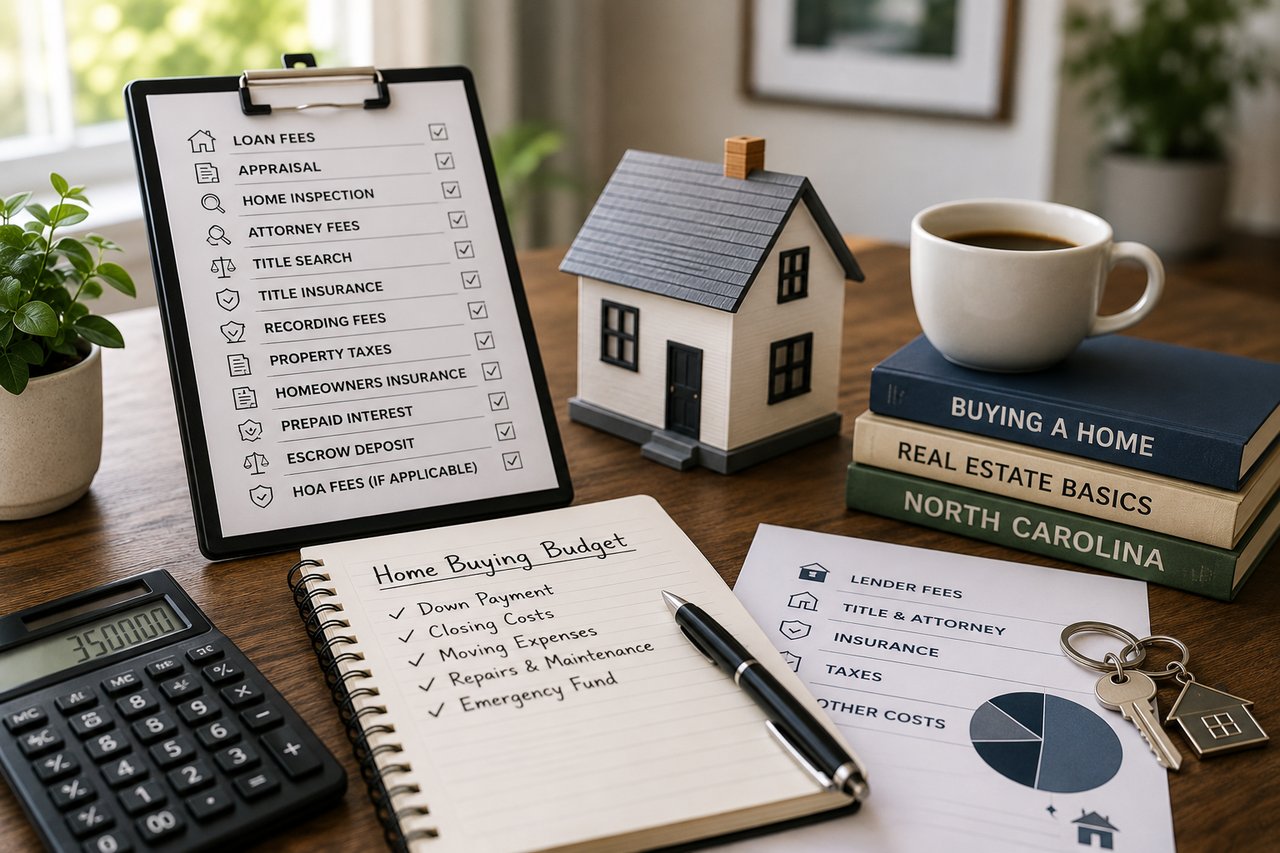
There are lender fees, attorney costs, title expenses, inspections, insurance, taxes, and other charges that can affect how much cash you actually need to bring to closing.
For buyers in Raleigh, Durham, Cary, Chapel Hill, and other North Carolina communities, understanding these expenses before making an offer can make the homebuying process much easier to navigate.
So, what exactly are closing costs, how much should you expect to pay, and what can you do to prepare?
Let's break it down.
Closing Costs Are More Than Just One Fee
Closing costs aren't a single charge.
They're a collection of expenses associated with financing the home, transferring ownership, and completing the purchase.
Depending on the property and loan, buyers may encounter costs related to:
Mortgage origination
Appraisal
Home inspection
Attorney services
Title search
Title insurance
Recording fees
Homeowners insurance
Property taxes
Prepaid interest
HOA fees
Escrow deposits
The exact combination varies from one transaction to another.
The North Carolina Housing Finance Agency notes that buyers may encounter expenses such as attorney fees, inspections, appraisals, loan origination fees, title-related costs, and recording fees as part of the homebuying process.
That means there's no single closing-cost number that applies to every North Carolina buyer.
Your Down Payment Isn't Your Total Cash Needed
One of the most common misunderstandings among first-time buyers is assuming their down payment represents everything they'll need upfront.
It doesn't.
Your down payment goes toward the purchase price of the property.
Your closing costs cover other expenses involved in completing the transaction.
For example, if you purchase a $400,000 home and put 5% down, your down payment would be $20,000.
But your total cash needed to close could be higher once you add lender charges, appraisal, title and attorney costs, prepaid insurance, taxes, and other expenses.
This is why buyers should think about total cash to close, not just the down payment.
If you're still trying to determine what price range makes sense for your finances, understanding how much house you can afford in Raleigh, Durham, and the Triangle can help you establish a more realistic starting point.
So, How Much Are Closing Costs in North Carolina?
This is probably the first question most buyers have.
The honest answer is: it depends.
Your closing costs can vary based on:
Purchase price
Loan program
Lender
Property taxes
Homeowners insurance
Title services
Attorney fees
Inspection choices
HOA requirements
Prepaid expenses
Seller concessions
You may see general estimates expressed as a percentage of the purchase price, but using a percentage as your final budget can be misleading.
A $350,000 home and a $600,000 home can have very different costs.
The best approach is to ask your lender for an estimate based on your actual purchase price and loan scenario.
Mortgage Fees Can Add to Your Upfront Costs
If you're financing your home, some of your closing costs will come from the mortgage itself.
These may include:
Loan origination fees
Underwriting fees
Processing fees
Credit report charges
Other lender fees
Your lender should provide a Loan Estimate that gives you an early breakdown of the expected costs.
This is one reason getting pre-approved is so valuable.
You're not simply finding out how much a bank is willing to lend. You're also beginning to understand what the financing side of the purchase may actually look like.
For buyers who are still early in the process, the Consumer Financial Protection Bureau's homebuying resources can also help explain mortgages, loan estimates, and closing disclosures.
Don't Forget About the Appraisal
If you're getting a mortgage, your lender will generally require an appraisal.
The appraisal helps the lender determine whether the property's value supports the amount being financed.
But an appraisal isn't the same as a home inspection.
An appraisal is primarily about value.
An inspection is about the condition of the home.
That distinction is important because a home can appraise at the expected value and still have issues that you need to know about before buying.
Home Inspections Are Another Expense Buyers Should Plan For
A home inspection is another cost buyers should consider before closing.
Depending on the property, buyers may also choose additional inspections for:
Termites
Radon
Septic systems
Wells
HVAC
Structural concerns
Moisture
Drainage
Not every property requires every type of inspection, but skipping necessary due diligence simply to save money upfront can create much bigger problems later.
This is especially important for first-time buyers.
Understanding the mistakes first-time homebuyers should avoid in Raleigh, Durham, and the Triangle can help you think through the expenses and decisions that often get overlooked.
North Carolina Buyers Should Understand Attorney and Title Costs
North Carolina real estate transactions involve attorneys, making attorney and title-related expenses an important part of the closing process.
The closing attorney helps handle the legal side of the transaction and works through title issues, documents, and the transfer of ownership.
Buyers may see charges related to:
Attorney services
Title search
Title insurance
Deed preparation
Recording documents
These expenses aren't always obvious when you're browsing homes online, but they're part of getting the property from the seller's name into yours.
Property Taxes and Insurance Can Affect Your Cash to Close
Another reason your final amount can be higher than expected is that some expenses may need to be paid ahead of time or placed into an escrow account.
These can include:
Homeowners insurance
Property taxes
Prepaid interest
Initial escrow deposits
The exact amount depends on the property, lender, closing date, and other details.
This is also why the final amount due at closing may not look exactly like the estimate you received when you first started shopping.
What About HOA Fees?
If you're buying in an HOA community, there may be additional expenses beyond your monthly HOA dues.
Depending on the community and transaction, buyers may encounter:
Transfer fees
Prorated dues
Initial contributions
Other association-related charges
But the cost isn't the only thing to investigate.
Before buying, you should also understand the community's rules, restrictions, financial situation, and overall lifestyle.
If you're considering an HOA property, asking the right questions before you make an offer can help you avoid surprises later. Our guide on questions to ask before buying a home in an HOA community covers some of the issues buyers should investigate.
Can the Seller Pay Some of Your Closing Costs?
Sometimes.
Depending on the transaction and loan guidelines, buyers may negotiate for the seller to contribute toward certain closing expenses.
These are often referred to as seller concessions or seller-paid closing costs.
For buyers, a seller credit can potentially reduce the amount of cash needed at closing.
But it isn't automatically the best strategy in every situation.
The strength of the market, the property's condition, the seller's motivation, the loan program, and the rest of the offer all matter.
That's why an offer shouldn't be evaluated based only on the purchase price.
If you're preparing to negotiate, understanding how to write a winning offer on a home in Apex can help you see how price and terms work together.
Can Down Payment Assistance Help With Closing Costs?
For some eligible buyers, assistance programs may help with upfront costs.
The North Carolina Housing Finance Agency offers programs designed to assist qualifying buyers with homeownership expenses. Program requirements, income limits, property requirements, and funding availability can vary.
That's why buyers should verify current program details directly through North Carolina Housing Finance Agency.
For buyers who are concerned about having enough money for both their down payment and closing costs, researching down payment assistance programs in Raleigh, Durham, and the Triangle may be worthwhile.
Don't Forget the Costs That Come After Closing
There's another part of the budget that often gets overlooked.
What happens after you get the keys?
You may still need money for:
Moving expenses
Furniture
Appliances
Landscaping
Utility setup
Repairs
Maintenance
Emergency expenses
This is why having enough money to close isn't necessarily the same as being financially ready to own the home.
Understanding the hidden costs of buying a home in Raleigh, Durham, and the Triangle can help you think beyond the down payment and closing table.
What Is a Loan Estimate?
After applying for a mortgage, your lender generally provides a Loan Estimate.
This document gives you an early look at important loan terms and estimated closing costs.
It can help you understand:
Estimated interest rate
Monthly payment
Loan amount
Estimated closing costs
Prepaid expenses
Estimated cash needed
It's a good idea to read this carefully rather than simply filing it away.
If you don't understand a fee, ask.
What Is a Closing Disclosure?
Closer to closing, you'll receive a Closing Disclosure containing the final details of your mortgage and closing costs.
For most mortgage transactions covered by the federal disclosure rules, the lender must provide the Closing Disclosure at least three business days before closing.
The Consumer Financial Protection Bureau explains how to review your Closing Disclosure and compare it with your earlier Loan Estimate.
Look closely at:
Loan amount
Interest rate
Monthly payment
Closing costs
Seller credits
Prepaid expenses
Cash to close
If something changed, ask your lender or closing attorney to explain it before signing.
How Buyers Can Prepare for Closing Costs
You don't need to know every fee before you start looking at homes.
But you should have a general strategy.
Start with your comfortable budget
Don't base your budget solely on the maximum amount a lender says you qualify for.
Understand your total cash requirement
Think about your down payment plus closing costs, prepaid expenses, inspections, and other upfront costs.
Keep money in reserve
Try not to spend every dollar you have just to get through closing.
Homeownership comes with ongoing expenses, and something will eventually need to be repaired or replaced.
Ask questions early
Your lender and closing attorney can explain the costs specific to your transaction.
Review your final numbers
Don't wait until closing day to discover that your cash-to-close amount is different from what you expected.
Why Your Purchase Price Isn't the Whole Story
Two homes can have the exact same purchase price but require very different amounts of cash.
One might have:
Lower property taxes
No HOA
Different insurance costs
Different seller concessions
A different loan structure
Another might have completely different expenses.
That's why smart homebuyers look at the total cost of ownership, not simply the number displayed on the listing.
And if you're trying to decide whether a particular home fits your budget, it's worth looking beyond the mortgage payment and understanding what homeownership will actually cost you month after month.
Final Thoughts
Closing costs aren't the most exciting part of buying a home, but understanding them can make the entire process much less stressful.
The goal isn't simply to have enough money to reach closing.
It's to understand how much you'll need to close, what you're paying for, and how much you'll have left afterward.
That preparation can help you make a more confident decision about the home you buy and the price you pay.
If you're considering a home in Raleigh, Durham, Cary, Chapel Hill, or another North Carolina community, Tamara White can help you understand the buying process, evaluate your options, and build a strategy around your goals.
Learn more about working with Tamara White when you're ready to take the next step.
FAQs
Are closing costs separate from the down payment?
Yes. The down payment goes toward the purchase price, while closing costs cover expenses associated with the mortgage, title, legal work, inspections, prepaid expenses, and other parts of completing the purchase.
How much are closing costs in North Carolina?
There isn't one fixed amount. Closing costs vary depending on the purchase price, loan type, lender, property taxes, insurance, title services, attorney fees, and other transaction details.
Can a seller pay my closing costs?
In some transactions, sellers may agree to contribute toward eligible buyer closing costs. The amount and whether it's permitted depends on the contract, loan program, and applicable guidelines.
Do first-time homebuyers pay closing costs?
Yes. First-time buyers generally have closing costs just like other buyers, although some assistance programs may help eligible buyers with certain upfront expenses.
Can down payment assistance help with closing costs?
Some programs may provide assistance that can be applied toward eligible upfront homebuying expenses. Buyers should review current program requirements with the North Carolina Housing Finance Agency or their lender.
When do I find out my final closing costs?
Your Closing Disclosure provides the final details of your mortgage and closing costs. For most covered mortgage transactions, you should receive it at least three business days before closing.