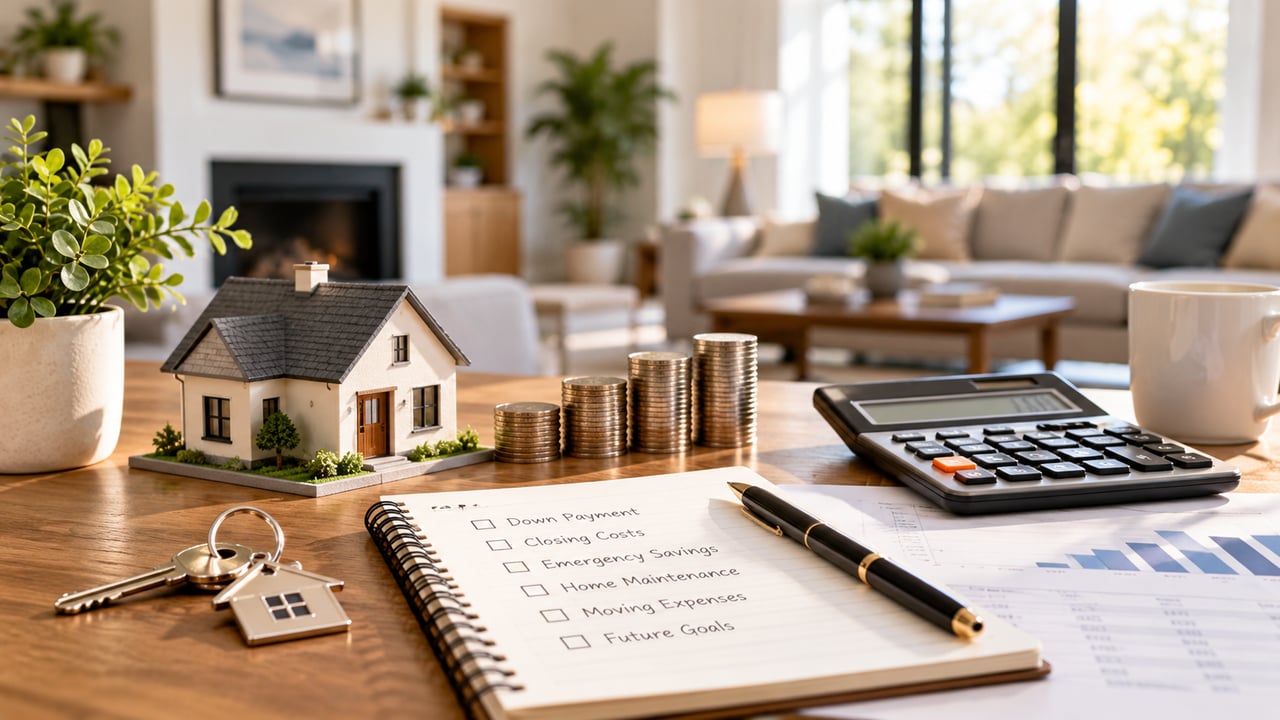
You saved for the down payment. You paid your closing costs. You finally got the keys.
Then you check your bank account and realize most of your savings are gone.
That is not where you want to be.
One of the biggest mistakes I see buyers make is focusing so much on getting enough money together to buy the home that they forget about the money they'll need after they buy it.
Because closing isn't the finish line.
It's the beginning of homeownership.
Once you move in, you still have a mortgage, utilities, property taxes, insurance, maintenance, repairs and all the normal expenses of everyday life. And sometimes, the house itself will surprise you with an expense you weren't expecting.
As a Raleigh real estate agent and investor, I encourage buyers to ask two separate questions:
How much money do I need to buy this home?
And:
How much money will I still have after I buy it?
Those two numbers shouldn't be treated as the same thing.
There isn't one savings amount that works for every buyer. Your income, monthly expenses, debt, home condition and financial goals all matter.
But there are some practical ways to determine whether you're leaving yourself enough breathing room.
Don't Use Every Dollar You Have for the Down Payment
It can be tempting to put as much money as possible into the house.
Maybe you've saved $80,000 and you're considering a larger down payment because you want to borrow less.
But if putting most of that money into the home leaves you with only a few thousand dollars in the bank, take a step back.
Once that money is invested in the property, it isn't as easy to access as cash sitting in your savings account.
The Consumer Financial Protection Bureau recommends considering your emergency savings, ongoing expenses, moving costs, renovations, furnishings and other financial goals when deciding how much you can comfortably spend on a home.
You can review the CFPB's guidance on how to figure out how much you want to spend on a home.
Your down payment matters.
But your remaining savings matter, too.
So, How Much Should You Have Left?
Instead of looking for one magic dollar amount, I recommend thinking about your remaining savings in a few different buckets.
1. Emergency savings
This is money for unexpected life events such as a job loss, major car repair or other financial emergency.
The CFPB commonly points to three to six months of expenses as a general emergency-savings cushion, although your personal target may be different.
You can read more about building an emergency savings cushion when buying a home.
2. Home maintenance and repairs
Your emergency fund shouldn't necessarily be the only money available after you buy a house.
Homes need maintenance.
Roofs age. HVAC systems stop working. Water heaters fail. Appliances break. Plumbing problems happen.
Fannie Mae suggests budgeting roughly 1% to 4% of a home's value per year for maintenance and repairs, depending on factors such as the home's age and condition.
You can read more about building a home maintenance and repair budget.
You may not spend that amount every year. The point is to recognize that homeownership comes with ongoing costs.
3. Moving and setup expenses
Don't forget the expenses that happen immediately after closing.
You may need money for:
Moving
Utility setup
New locks
Curtains and blinds
Furniture
Appliances
Paint
Lawn equipment
Small repairs
None of these has to be a huge expense individually, but they can add up quickly.
Think in Months of Expenses, Not Just Dollars
Let's say you have $25,000 left after closing.
Is that enough?
It depends.
If your household needs $6,000 each month for essential expenses, $25,000 gives you a very different cushion than it would for someone whose essential expenses are $3,000 per month.
That's why I prefer looking at your savings in terms of months of essential expenses.
For example:
$4,000 in essential monthly expenses × 3 months = $12,000
$4,000 × 6 months = $24,000
This gives you a much better idea of how much flexibility you actually have.
And remember, your emergency fund isn't the same thing as money you've set aside for a new couch or kitchen renovation.
Your First Few Months as a Homeowner Can Be Expensive
This is something buyers sometimes underestimate.
You close on the house and suddenly realize you need things you didn't think about while you were focused on getting to closing.
Maybe the bedrooms need blinds.
Maybe you need a washer and dryer.
Maybe the backyard needs work.
Maybe the previous owner took the refrigerator.
Maybe you want to change the locks.
Maybe your first electric bill is higher than expected.
These expenses aren't necessarily emergencies, but they are part of the transition into homeownership.
That's why I don't recommend planning your finances down to the last dollar before closing.
Leave yourself room.
Your Home Inspection Doesn't Mean Nothing Will Break
A home inspection is an important part of the buying process, but it doesn't guarantee that everything in the home will work perfectly for years to come.
A home is made up of systems and components that age at different rates.
The HVAC may be older.
The roof may have several years left but eventually need replacement.
An appliance could stop working.
A plumbing issue could appear after you move in.
That doesn't mean you should be afraid to buy a home.
It means you should budget like a homeowner.
If you want to understand the expenses that can appear beyond the purchase price, this is worth reviewing:
Hidden Costs of Buying a Home in Raleigh, Durham and the Triangle
Don't Forget About Your Total Monthly Housing Cost
Your mortgage payment isn't necessarily your entire monthly housing expense.
Depending on your situation, you may also have:
Property taxes
Homeowners insurance
Mortgage insurance
HOA fees
Utilities
Maintenance
Repairs
This is why I tell buyers not to ask only:
"Can I qualify for this house?"
Ask:
"Can I comfortably afford to own this house?"
Those are two very different questions.
The CFPB recommends considering ongoing costs such as property taxes, homeowners insurance, maintenance and other expenses when determining what you can afford.
You can review its guidance on figuring out how much you can comfortably spend on a home.
What If You Have to Choose Between a Bigger Down Payment and More Savings?
This is where your personal financial situation becomes important.
Suppose you have enough money for a 20% down payment, but putting 20% down would leave you with very little cash afterward.
You could discuss whether a smaller down payment would leave you with a healthier financial cushion.
That doesn't mean a smaller down payment is automatically better.
A larger down payment can reduce the amount you borrow and may eliminate mortgage insurance depending on the loan.
But keeping more cash available can also give you flexibility after closing.
The CFPB recommends considering your available savings, closing costs, emergency cushion and other financial goals when determining your down payment.
You can read its guidance on how to determine your down payment.
This is a decision to discuss with your lender based on your specific loan and financial situation.
What About Closing Costs?
Your down payment isn't the only large expense you'll have before getting the keys.
Depending on the transaction, closing costs may include lender fees, appraisal, title-related charges, government fees, prepaid taxes and insurance, and other expenses.
The CFPB explains the different types of mortgage closing costs and fees.
That's why I don't recommend looking at your savings and simply subtracting your down payment.
You need to consider your total cash to close and then see what will remain.
Your Loan Estimate and Closing Disclosure can help you understand the amount you're expected to bring to closing.
You can also review the CFPB's Loan Estimate guide to better understand the information you'll receive during the mortgage process.
You May Need a Separate Home Repair Fund
I like the idea of thinking about your savings in two categories:
Emergency fund:
Money for unexpected life emergencies.
Home reserve:
Money for repairs, maintenance and unexpected property expenses.
This distinction can be helpful.
Imagine your car needs a $2,000 repair during the same month your water heater fails.
If all of your savings are in one small account, suddenly you're trying to decide which problem gets paid first.
Having money set aside for homeownership expenses can give you more flexibility.
Fannie Mae's guidance on building a home maintenance and repair budget is a useful starting point when thinking about these costs.
What If You're a First-Time Buyer?
First-time buyers often face the biggest challenge here because they may have spent years saving for their down payment.
Once they finally buy, it can feel like the savings goal is complete.
But your savings shouldn't stop at closing.
In fact, this is when you need to start rebuilding your financial cushion.
If your down payment and closing costs use most of your savings, consider whether you should:
Choose a slightly less expensive home
Adjust the size of your down payment
Explore eligible assistance programs
Delay nonessential renovations
Keep more cash available after closing
The goal isn't simply to become a homeowner.
The goal is to become a homeowner without immediately putting yourself under financial pressure.
If you're a first-time buyer, these may also help:
First-Time Home Buyer Programs in North Carolina
Down Payment Assistance Programs in Raleigh, NC
What If You Want to Renovate Right Away?
This is another area where buyers can get themselves into trouble.
You close on the house and immediately want to replace the floors, remodel the kitchen, repaint everything and furnish every room.
I understand the excitement.
But you don't have to do everything in the first six months.
If the kitchen works, live with it for a while.
If the guest bedroom doesn't have furniture yet, that's okay.
If a cosmetic project can wait, consider waiting.
You may discover that your priorities change once you've actually lived in the home.
And more importantly, you don't want to spend your entire cash reserve making the house look finished while having nothing left for an actual emergency.
Five Questions to Ask Before You Close
Instead of asking only, "How much money should I have left?", ask yourself these five questions:
1. Do I still have several months of essential expenses saved?
Three to six months is a commonly used emergency-savings guideline, but your personal target depends on your income, expenses and circumstances.
2. Do I have money for immediate home expenses?
Think about moving, utilities, furniture, appliances and small repairs.
3. Could I handle an unexpected repair?
You don't need to know exactly what will break.
You need enough flexibility that one repair doesn't completely disrupt your finances.
4. Can I continue saving after I buy?
If your new housing costs leave you unable to save anything each month, the home may be stretching your budget too far.
5. Can I still handle my other financial goals?
Retirement savings, debt repayment, education expenses, family obligations and other priorities don't disappear when you become a homeowner.
Your new home needs to fit into your overall financial life.
A Simple Example
Let's say you're buying a $400,000 home and you've saved $90,000.
You might be tempted to put a large portion of that money toward the purchase.
But before deciding how much to put down, you also need to account for closing costs, your emergency savings, moving expenses and money you'll need for the home itself.
If putting more money down leaves you with only $5,000 in savings, ask yourself:
Would I be comfortable handling a major repair or several months of unexpected expenses with only $5,000 available?
If the answer is no, it may be worth discussing different financing scenarios with your lender.
The goal isn't to put down the largest amount possible.
The goal is to structure the purchase so you can comfortably own the home afterward.
When Should You Consider Waiting to Buy?
If buying the house would leave you with almost no savings, that's something I would take seriously.
You don't necessarily need an enormous bank balance to buy a home.
But you should have enough financial flexibility to handle the responsibilities that come with ownership.
If you're using every dollar you have just to reach the closing table, consider revisiting your:
Purchase price
Down payment
Financing options
Timeline
Sometimes buying a less expensive home can be a better financial decision than stretching for the home that uses nearly every dollar of your savings.
That's one reason understanding how much house you can actually afford is so important.
How Much House Can You Afford in Raleigh, Durham and the Triangle
The Number in Your Savings Account Isn't the Whole Story
Having $20,000 left after closing doesn't automatically mean you're financially comfortable.
Neither does having $50,000.
The more important question is:
How does that amount compare with your monthly expenses, income, home condition and other financial responsibilities?
Someone with a stable income, low debt and a newer home may have a very different financial position from someone with variable income, several debts and an older home that needs work.
That's why I don't want buyers to chase a specific savings number simply because they saw it online.
Use general guidelines as a starting point.
Then build a reserve that makes sense for your situation.
Don't Become House Rich and Cash Poor
Getting the keys to your own home is exciting.
But I don't want buyers to reach closing day thinking only about how much they can afford to put into the house.
Think about what happens the day after closing.
You still need to live.
You still have bills.
You still need savings.
And now you also have a property to maintain.
The strongest purchase isn't necessarily the one where you put the most money down.
It's the one where the home fits your budget and you still have enough financial breathing room to enjoy owning it.
If you're planning to buy in Raleigh, Durham, Cary, Apex, Morrisville or another Triangle community, start by understanding your budget, your cash reserves and the total cost of ownership.
Then you can shop for the home that fits—not just the home you can technically qualify for.
Search Homes for Sale in Raleigh NC
Frequently Asked Questions
How much money should I have left after buying a home?
There isn't one number that works for every buyer. A commonly used emergency-savings guideline is three to six months of essential expenses, while you should also consider money for moving, immediate home expenses, repairs and other financial goals.
Should I use all my savings for a down payment?
You should carefully consider how much cash you'll have left after your down payment and closing costs. A larger down payment can reduce the amount you borrow, but having adequate savings can give you more flexibility after closing.
How much should I budget for home maintenance?
There is no fixed amount for every home, but Fannie Mae suggests a general guideline of 1% to 4% of the home's value per year, depending on factors such as the home's age and condition.
What expenses should I expect immediately after buying?
Moving costs, utility setup, furniture, appliances, small repairs and other unexpected expenses can come up quickly. It's smart to keep cash available instead of assuming all your expenses end at closing.
Is it better to make a larger down payment or keep more savings?
It depends on your loan terms, financial goals, monthly payment and how much cash you would have remaining. Discuss both scenarios with your lender before deciding.
What if buying the home would leave me with almost no savings?
That's a reason to revisit the numbers before closing. You may want to consider a lower purchase price, a different down-payment amount, eligible assistance programs or waiting until you have a larger financial cushion.