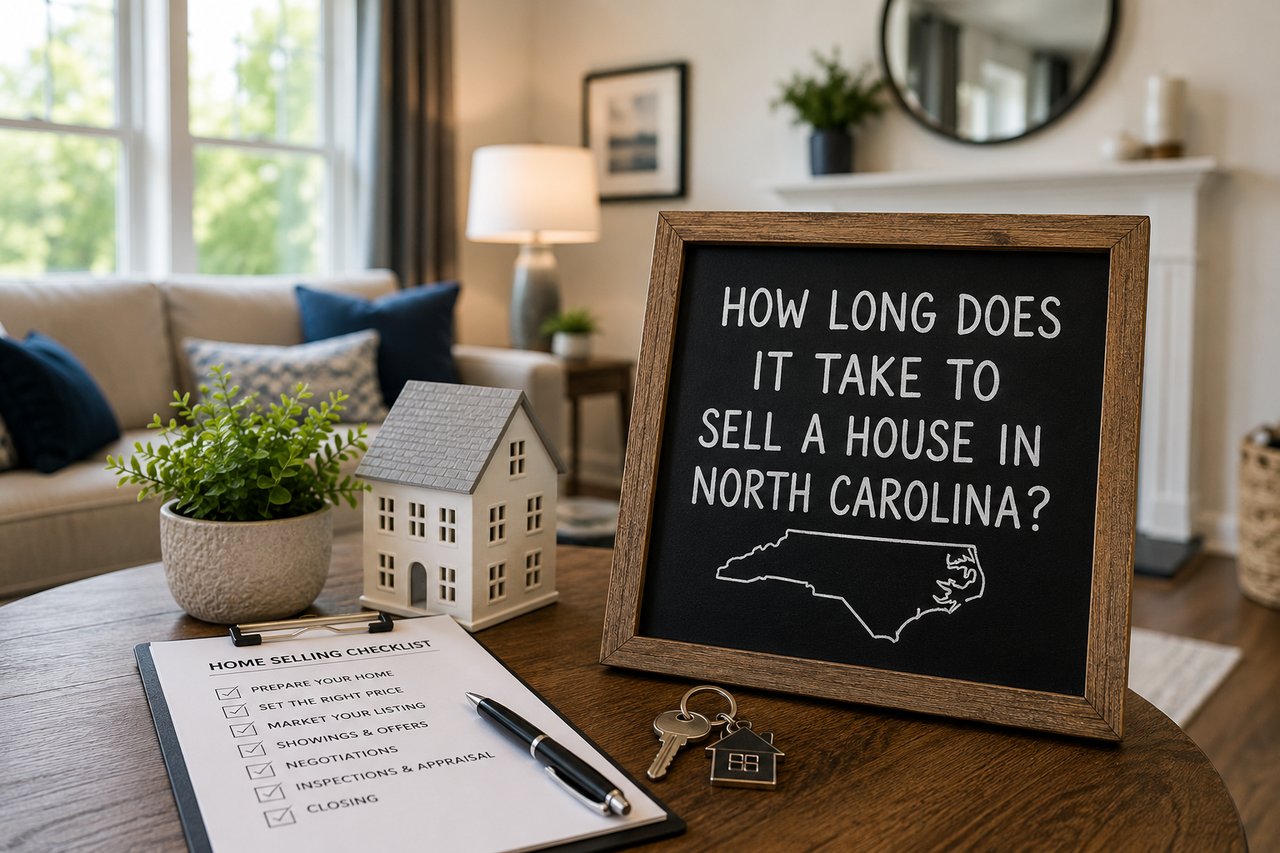
One of the first questions homeowners ask when they decide to sell is:
“How long will it take to sell my house?”
It’s a reasonable question. You may be planning a move, buying another home, relocating for work, or simply trying to understand how long your home might be on the market.
The truth is, there isn't one timeline that applies to every home in North Carolina.
A property in Raleigh can have a very different selling timeline from a home in Cary, Durham, Fuquay-Varina, Chapel Hill, or another North Carolina community. Pricing, condition, location, competition, and buyer demand can all make a difference.
Current North Carolina housing market trends can provide useful context, but the market conditions surrounding your specific home are what really matter.
So, How Long Does It Usually Take?
There are actually several different stages involved in selling a home.
The timeline can include:
Preparing the property
Choosing a listing price
Marketing the home
Waiting for an offer
Negotiating the contract
Completing inspections
Appraisal and financing
Title and closing
Moving out
This means there is a difference between how long it takes to receive an offer and how long it takes to officially complete the sale.
Some homes may attract an offer within days. Others may take several weeks or longer.
Once you're under contract, the closing process adds additional time depending on the buyer's financing, inspections, appraisal, title work, and other factors.
Your Asking Price Can Make a Major Difference
One of the biggest factors affecting how quickly a house sells is its price.
Sellers naturally want to get the highest possible price for their home. That's completely understandable.
But buyers are comparing your property against everything else available in their price range.
If your home is priced significantly higher than comparable properties, buyers may simply move on to another listing.
That can lead to:
Fewer showings
Less buyer interest
Longer time on the market
Price reductions
A weaker negotiating position later
This is why pricing should be based on current market conditions rather than simply what you paid for the property or how much you would like to make.
For Cary homeowners, taking an investor-style approach to pricing your Cary home can be a useful way to think about value more objectively.
The Condition of Your Home Matters Too
Price isn't the only factor.
Buyers today have plenty of opportunities to compare homes online before they ever schedule a showing.
If two similar homes are priced around the same amount, the one that looks cleaner, better maintained, and more move-in ready may receive more attention.
Before listing, sellers may want to consider:
Touching up paint
Repairing obvious issues
Deep cleaning
Decluttering
Improving curb appeal
Updating lighting
Taking care of small maintenance items
You don't necessarily need to completely renovate your home.
In fact, spending a large amount on improvements that buyers don't value may not make financial sense.
The goal is to make the property competitive for its price range.
If you're selling in the Triangle, your preparation strategy should also reflect your specific market. For example, preparing your Fuquay-Varina home for a successful sale may involve different considerations depending on the neighborhood, property type, and buyer pool.
Your Listing's First Impression Happens Online
Before a buyer walks through your front door, they will probably see your home online.
That means your listing photos, price, description, and overall presentation matter.
A buyer scrolling through listings is making quick decisions:
Does this home look worth seeing?
If the answer is no, you may never get the opportunity to show them everything the property has to offer.
Strong listing presentation should make it easy for buyers to understand:
The home's best features
The layout
The location
The lifestyle it offers
What makes it different from competing homes
Good marketing doesn't guarantee a quick sale, but poor presentation can make it harder to generate interest.
Location Can Affect How Quickly a Home Sells
A home's location can influence both demand and the type of buyer it attracts.
And location isn't simply about whether the property is in Raleigh, Durham, or Cary.
Buyers may also consider:
Neighborhood amenities
Commute times
Schools
Shopping
Restaurants
Parks
Traffic
Community atmosphere
Future development
Two homes with similar prices and square footage can have completely different buyer demand because of where they're located.
For Cary sellers, understanding what everyday life really looks like in Cary can also help illustrate why lifestyle and location play such an important role in how buyers evaluate a property.
What Happens Once You Receive an Offer?
Getting an offer is an exciting milestone, but the sale isn't finished yet.
After accepting an offer, the transaction typically moves through several steps.
Depending on the contract, these may include:
Home inspections
Repair negotiations
Appraisal
Mortgage underwriting
Final loan approval
Title work
Homeowners insurance
Closing preparation
This is why sellers should think about the entire transaction rather than focusing only on the number of days their home is listed.
A buyer could make an offer quickly, but the transaction may still take several weeks to reach closing.
What If Your Home Has Been on the Market for a While?
If your property isn't getting the attention you expected, it's worth looking at the situation objectively.
Start by asking:
Are buyers scheduling showings?
If very few people are coming to see the property, the price, marketing, or presentation may need to be reconsidered.
Are buyers showing up but not making offers?
That could point toward concerns about price, condition, layout, or other features.
Are you receiving repeated feedback about the price?
That may be a sign that the market is telling you something.
Instead of simply waiting and hoping the right buyer eventually appears, use the activity you're receiving to determine whether your strategy needs to change.
Is There a Best Time of Year to Sell?
Many homeowners wonder whether they should wait until spring or another traditionally busy selling season.
Seasonality can influence buyer activity, but there isn't one perfect time to sell every home.
Your personal circumstances matter too.
You may need to move because of:
A new job
A growing family
Retirement
A relocation
A change in lifestyle
The desire for a different neighborhood
Waiting for the “perfect” market may not always be the best decision.
A better question is:
“Is my home prepared to compete in today's market?”
If the answer is yes, you may already have what you need to begin.
Selling Your Current Home Before Buying Your Next One
For many homeowners, selling isn't an isolated transaction.
It's the first step toward buying another home.
That creates additional timing considerations.
You may need to coordinate:
Listing your current property
Accepting an offer
Negotiating a closing date
Finding your next home
Securing financing
Moving between properties
This is especially important for homeowners who want to move into a larger home.
If you're considering a move-up purchase, when to sell your Cary home and move up with confidence can help you think through the timing and planning involved.
How Can You Help Your Home Sell More Efficiently?
While nobody can guarantee a specific selling timeline, sellers can control several important parts of the process.
Start With the Right Price
Your listing price should reflect current comparable sales, competition, condition, and buyer demand.
Prepare Before You List
Address obvious repairs and make the home as clean and presentable as possible.
Make the First Impression Count
Professional photography, strong marketing, and a clear listing description can help attract more qualified buyers.
Understand Your Competition
Look at what buyers can purchase instead of your home.
Your competition isn't just what sold last month. It's also the homes buyers can see and tour right now.
Make the Showing Process Convenient
The easier it is for qualified buyers to see your property, the more opportunities you have to generate an offer.
Have a Plan Before You Go Live
Selling becomes much easier when you already know what you're trying to accomplish.
If you want a more detailed overview of the selling process, this step-by-step guide to selling a home in Raleigh walks through the major stages from preparation to closing.
Does Your Home Need to Be Completely Renovated?
Not at all.
One of the biggest misconceptions about selling is that homeowners need to spend a large amount of money remodeling everything before listing.
That isn't necessarily true.
Some improvements can make a meaningful difference, while others may not provide enough return.
Before starting a major renovation, consider:
What buyers in your price range expect
What competing homes offer
Which repairs are actually necessary
Whether the improvement will increase buyer appeal
How much the project will cost
Sometimes a home simply needs to be clean, organized, well-maintained, and priced correctly.
What If You're Selling Because You're Moving Up?
A move-up sale requires a little more planning because you're managing two major decisions at the same time.
You aren't just asking:
“How much can I sell my house for?”
You may also be asking:
“What can I afford next?”
That means your selling strategy should take your next purchase into account.
The amount of equity you have, your financing options, the timing of your purchase, and the expected proceeds from your sale can all affect your next move.
The Goal Isn't Always to Sell the Fastest
It can be tempting to focus entirely on speed.
But selling in five days isn't automatically better than selling in 20 days if the first offer requires unfavorable terms or a significant price concession.
The real goal is to find the right balance between:
Price
Timing
Terms
Buyer quality
Your personal goals
A successful sale is one that helps you move forward financially and practically.
Final Thoughts
So, how long does it take to sell a house in North Carolina?
The answer depends on the home.
Pricing, condition, location, competition, marketing, and buyer demand all influence the timeline.
The best way to improve your chances of a successful sale isn't to simply hope the market moves quickly.
It's to prepare strategically before the home goes on the market.
That means understanding your property's value, making smart improvements, presenting the home well, and having a clear plan for what happens after an offer comes in.
If you're thinking about selling in Raleigh, Durham, Cary, Fuquay-Varina, or another North Carolina community, Tamara White's real estate services can help you evaluate your options and build a selling strategy around your goals.
FAQs
How long does it take to sell a house in North Carolina?
The timeline varies depending on the property's location, price, condition, competition, and current buyer demand. Some homes sell within days, while others can take several weeks or longer.
What makes a house sell faster?
Accurate pricing, good presentation, professional marketing, strong photography, and convenient showings can all help attract serious buyers.
Should I renovate my home before selling?
Not necessarily. Some repairs and improvements can increase buyer appeal, but major renovations aren't always worth the cost. The right approach depends on the property and local competition.
Does the time of year matter when selling a house?
Seasonality can affect buyer activity, but there isn't one perfect selling season for every home. Your property's readiness and current market conditions are also important.
What happens after I accept an offer?
The transaction typically moves through inspections, appraisal, financing, title work, and other contractual steps before the closing takes place.
What should I do if my home isn't getting offers?
Look at the feedback you're receiving. Low showing activity may indicate a pricing or marketing issue, while showings without offers may point toward price, condition, or another buyer concern.